
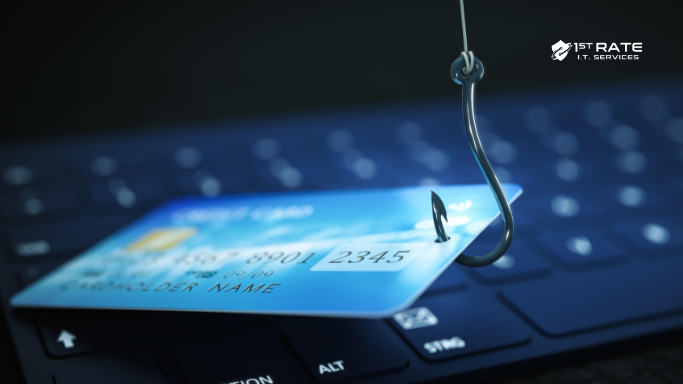
For years, employee security training followed a simple, predictable playbook. Workers were told to inspect sender addresses carefully, flag obvious grammar mistakes, and avoid clicking suspicious hyperlinks embedded in unknown messages. If an email looked slightly unusual, the team deleted it, and the corporate network remained safe.
Today, that traditional playbook is completely obsolete. Cybercriminals have abandoned low-effort, generic text templates. According to recent threat reports, over 80% of email exploits are now generated by automated AI tools. These advanced variants mirror executive communication styles perfectly and contain zero spelling errors. To keep your network safe, your enterprise requires modern advanced phishing protection designed to intercept two highly sophisticated tactics: weaponized HTML files and QR code redirection.
The Massive Rise of Weaponized HTML Attachments
How Local Browser Scams Bypass Secure Email Gateways
Most business owners assume their Secure Email Gateway (SEG) sandboxes and inspects every file attachment. While this is true for common formats like executables or compressed folders, malicious actors have shifted to a different vector. Recent security tracking shows that over 10% of all HTML attachments sent to mid-market companies are now fully weaponized.
When a user opens a malicious HTML file, they are not clicking an external website link monitored by your firewall. Instead, the file executes locally inside the employee’s web browser. It displays a perfect, localized replica of a Microsoft 365 or DocuSign login window. Because the script runs locally on the endpoint rather than over the live internet, standard perimeter defenses fail to flag the behavior. Once your worker inputs their password, the script captures their access token instantly, bypassing multi-factor authentication (MFA) safeguards entirely.
Decoding the Threat of “Quishing” (QR Code Scams)
Moving the Attack Surface to Personal Mobile Devices
The second major loophole exploit involves embedding high-resolution QR codes directly inside PDF invoices or standard document notifications. Security researchers refer to this growing trend as “Quishing.” It represents an incredibly dangerous gap for corporate networks.
Traditional security gateways are designed to crawl and evaluate text links. They do not regularly extract, decode, and follow graphic images hidden inside attached files. When an employee scans a QR code with their mobile phone, the interaction shifts away from your monitored workstation environment. The attack lands on a personal smartphone that often lacks corporate endpoint protection, firewalls, or Zero Trust authentication layers. This simple redirection allows bad actors to harvest corporate credentials in seconds.
Implementing Multi-Layered Advanced Phishing Protection
Defending against these hidden entry points requires moving away from static, boundary-based inspection filters. At 1st Rate I.T. Services, we build dynamic, identity-first security ecosystems. Our framework provides robust protection through three critical technical layers.
1. Inbound HTML and Script Obfuscation Analysis
Our security systems don’t just scan file names; they strip down and read raw code inside every incoming document. If an inbound file contains hidden javascript, unauthorized redirects, or spoofed authentication scripts, the system isolates the file before it hits your employee’s inbox.
2. Continuous API-Driven Mailbox Monitoring
Traditional email filters sit only at your outer perimeter, meaning they miss threats that originate from compromised internal accounts. We integrate advanced security tools directly into your cloud environments via native APIs. This structure allows our monitoring software to continuously analyze internal message behavior, catching anomalous file sharing or text changes in real time. Learn more about configuring these secure perimeters on our Network Design infrastructure page.
3. Modernized Technical Simulation Training
If your company runs security training only once a year, your workforce remains vulnerable. We deploy continuous, automated simulation modules that reflect real-world threat intelligence. We test your teams using realistic HTML attachments, fake collaboration tool links, and simulated QR code vectors. This process builds practical recognition habits across your entire workforce.
A single credential theft can compromise your entire corporate data repository in minutes. Relying on legacy email filters to protect your data leaves your organization incredibly exposed to modern, automated exploits.
Is your enterprise truly protected against advanced credential harvesting? Don’t wait for a compromised session token or a severe data leak to verify your systems. Call the 1st Rate team today at +1 (855) 783-TECH to schedule a professional Security Infrastructure and Email Readiness Assessment.